

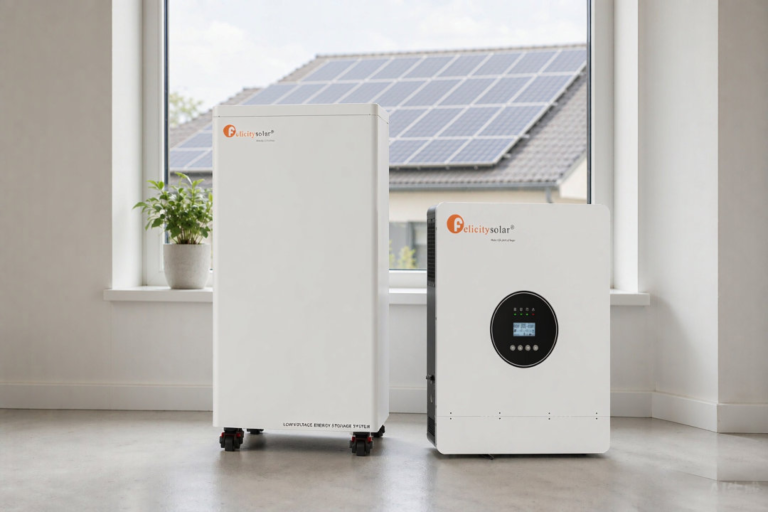
As renewable energy adoption accelerates, more households and businesses want to store the electricity they generate instead of exporting all of it to the grid. An all-in-one energy storage system brings the battery, the inverter, the battery management system (BMS), energy management logic, and remote monitoring together in a single enclosure. Rather than sourcing and wiring separate boxes, the owner installs one compact unit that stores electricity, converts it into usable AC power, and controls how energy moves between the solar array, the battery, the grid, and the loads.
A traditional split system can deliver the same result, but it requires several individual components to be selected, matched, and commissioned separately. An all-in-one design removes most of that work.
1. How an All-in-One System Differs from a Traditional Split System
In a conventional energy storage installation, several separate devices have to work together:
| Component | Function |
|---|---|
| Battery | Stores electricity generated by the solar array or drawn from the grid |
| Inverter | Converts DC power into AC power |
| BMS | Monitors battery safety and performance |
| EMS | Controls how energy is distributed |
| Monitoring system | Provides remote visibility and management |
Because these functions share one enclosure, an all-in-one energy storage system reduces installation complexity and removes most of the compatibility risk between separately purchased components. For the user, that means a reliable energy solution with fewer parts to specify, less wiring and a shorter commissioning time.
2. What Components Does an All-in-One Energy Storage System Include?
Battery Storage Module
The battery is the core energy storage element. It holds electricity generated from renewable sources or drawn from the grid, and releases it when needed.
Most modern systems use lithium iron phosphate (LiFePO4) batteries because of their:
- High safety performance
- Long cycle life
- Stable operation
- Good thermal resistance
Capacity should be sized against daily consumption and the number of backup hours required.
| Application | Typical Capacity |
|---|---|
| Small residential system | 5–15 kWh |
| Larger home energy storage | 15–40 kWh |
| Commercial applications | 50 kWh up to several MWh |
These are indicative ranges only; the right configuration depends on the load profile, site conditions and how much backup autonomy is needed. Selecting the correct capacity ensures enough backup power without overspending.
Inverter and Energy Management
The inverter converts the direct current produced by solar panels, or drawn from the battery, into the alternating current used by household appliances. Solar panels generate DC, but the vast majority of appliances run on AC.
A modern all-in-one energy storage system usually integrates hybrid inverter technology to support:
- Solar energy conversion
- Battery charging and discharging
- Grid connection management
- Backup power supply
In addition, the energy management logic can automatically regulate how energy is used, based on factors such as solar production, household consumption and battery state of charge.
3. What Are the Benefits of an All-in-One Energy Storage System?
Simplified Installation and Space Saving
One of the biggest advantages of an integrated system is its compact design. Because multiple functions share a single enclosure, an all-in-one unit needs fewer separate components, less wiring and less floor space than a split configuration.
| Comparison | Integrated System | Traditional System |
|---|---|---|
| Equipment quantity | Fewer devices | Multiple devices |
| Installation | Simpler | More complex |
| Space requirement | Lower | Higher |
| Management | Centralised control | Separate control |
Improved Energy Management
An all-in-one energy storage system can manage energy flow intelligently between the solar array, the battery and the loads. For example:
- Solar energy can be used directly during the day
- Surplus generation can be stored for use after sunset
- Stored energy can be discharged during peak tariff hours, reducing grid purchases and peak demand charges
Flexible Operation
Different users have different energy requirements. Depending on the model, modern all-in-one systems may support several operating modes, for example:
| Mode | Purpose |
| On-grid mode | Works alongside utility power |
| Off-grid mode | Provides independent electricity |
| UPS mode | Backup power during outages |
| Zero-export mode | Prevents surplus power from feeding into the grid |
Available modes vary by model, so the specification sheet for the specific unit should always be checked.
4. What Are the Applications of an All-in-One Energy Storage System?
Residential Energy Storage
Residential energy storage is currently one of the fastest-expanding applications for all-in-one systems.
As solar panels become more common, many homeowners prefer to store unused solar energy rather than send it back to the grid. An all-in-one energy storage system allows a household to:
- Use solar power more efficiently
- Reduce electricity costs
- Maintain backup power during outages
- Increase energy independence
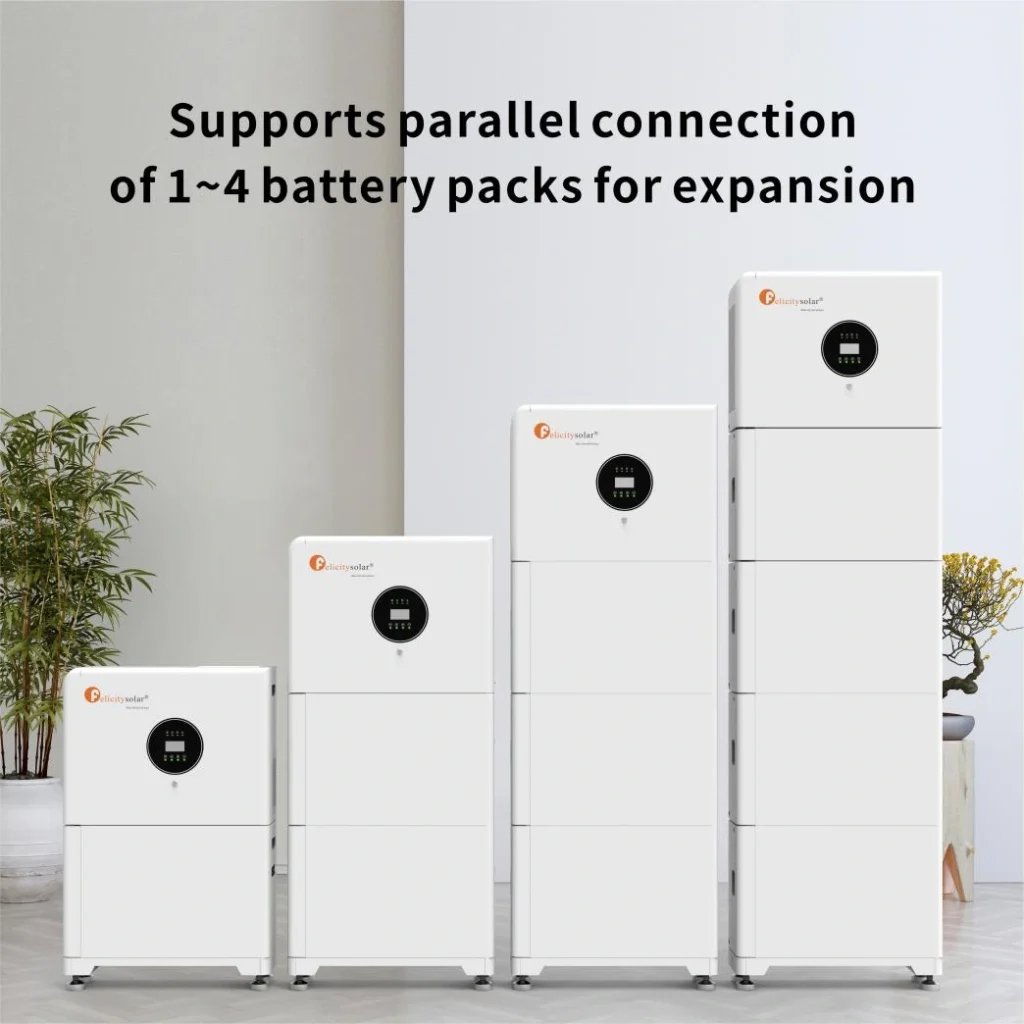
For example, homeowners looking for a compact, integrated solution may consider the Felicity Solar AI100-8048 all-in-one energy storage system. It combines an 8 kW pure sine wave inverter, a 5.12 kWh LiFePO4 battery, a built-in MPPT solar charge controller and smart BMS protection in a single floor-mounted unit, which simplifies installation, saves space and provides reliable power for residential self-consumption, backup and energy independence.
Commercial and Industrial Energy Storage
Businesses often face high electricity demand and rising energy costs. Energy storage helps commercial and industrial users take control of their power management.
Common benefits include:
- Reducing peak demand charges
- Improving energy cost control
- Supporting stable business operations
- Increasing renewable energy utilization
Factories, offices, warehouses and commercial buildings can combine on-site solar generation with storage to build a more efficient and resilient energy system.
Off-Grid Energy Storage
In areas with limited grid access, an all-in-one energy storage system can provide an independent power solution.
Typical applications include:
- Remote homes
- Agricultural facilities
- Outdoor communication sites
- Temporary construction sites
By combining solar generation with storage, users can achieve a reliable electricity supply without depending entirely on conventional grid infrastructure.
Conclusion
An all-in-one energy storage system integrates energy storage, power conversion, and intelligent control in a single unit. Its compact form factor and flexible operating modes make it suitable for residential, commercial, and off-grid applications alike.
As renewable energy continues to expand worldwide, integrated storage solutions are expected to play an increasingly central role in improving energy efficiency and supply reliability.
If you would like to learn more about energy storage systems, or need technical support with system configuration, please contact Felicity Solar.
FAQ
Do I need a separate inverter with an all-in-one energy storage system?
No. The inverter is already built into the unit, so a separate inverter is not required. This is one of the main reasons installation is faster and less costly than with a split system.
Can an all-in-one energy storage system work with solar panels?
Yes. All-in-one systems are commonly paired with a PV array so that surplus daytime generation can be stored instead of exported, then used in the evening or during an outage.
Is an all-in-one energy storage system suitable for homes?
Yes. It is widely used in residential applications to reduce electricity costs, improve energy independence, and provide backup power.
Is the maintenance cost of an all-in-one energy storage system high?
Generally, no. Because the key components share one enclosure and can be monitored remotely, routine upkeep is largely limited to keeping ventilation paths clear and reviewing system data in the monitoring app.