

Off-grid solar installation has become a dream reality for many, providing electricity independent of the power grid for small homes, studios, RVs, and remote properties. This article will provide a detailed introduction to the working principle of off-grid solar systems, the required components, and how to install them safely and efficiently.
How an Off-Grid Solar Installation Works
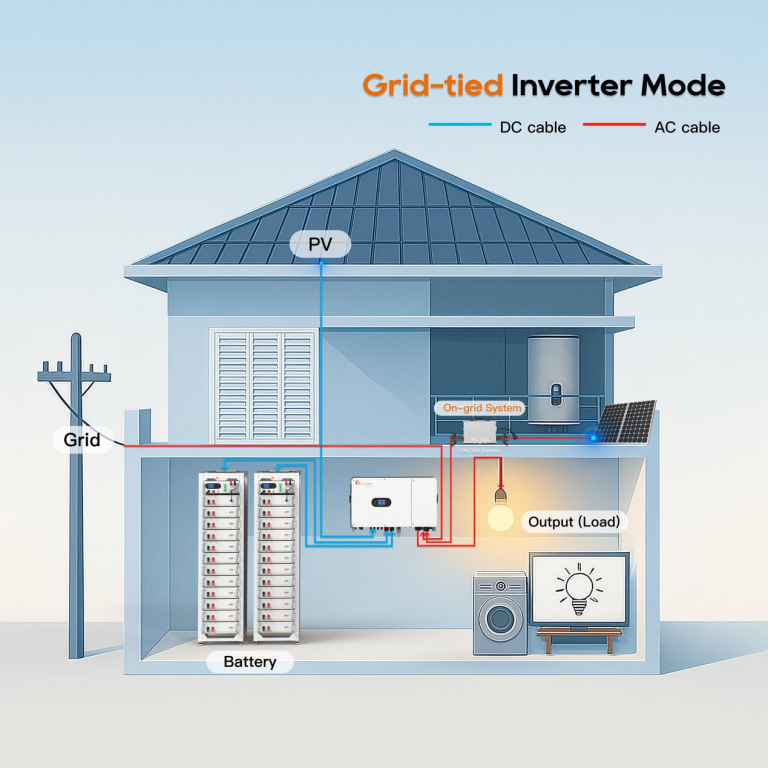
Before starting to specify equipment, a brief understanding of what an off-grid system does is in order. Unlike grid-tied solar, an off-grid setup must operate in a standalone fashion, producing and storing all electricity on site. The basic flow is quite simple:
- Solar panels collect sunlight.
- A charge controller regulates the power going into the batteries.
- The batteries save energy for nighttime or cloudy days.
- It converts the stored DC power into AC power, which is used by home appliances.
- Optional backup generators or wind turbines are used to supplement poor sunlight days.
Off-grid solar installation requires the creation of a balance, which will make sure that the solar panel array, the battery capacity, and the inverter output are matched against actual power needs on the property.
Key Components You Must Know Before Installation
1. Solar panels
These collect energy and subsequently produce direct current. You can choose either the monocrystalline or polycrystalline panels, but generally, people go for the former because they are more efficient and have better performance during low-light conditions.
2. Regulator
This protects the battery bank by ensuring that panels do not overcharge it. There are two types:
- PWM (older, cheaper)
- MPPT: More efficient, mostly for big systems
Most modern installations use MPPT controllers since they are more efficient in handling power, especially when sunlight conditions fluctuate.
3. Battery Bank
The battery bank is utilized for storing energy that could be used later. Common types include:
- Lead-acid batteries: relatively cheap but heavy, with a shorter lifetime and limited depth of discharge.
- Lithium batteries: support deeper discharge cycles, offer a longer lifespan, and are easier to maintain, making them more suitable for modern home inverter systems.
4. Inverter
This converts DC energy into AC electricity, which is utilized by home appliances. Pure sine wave inverters are preferred when it comes to an off-grid solar installation because they work with laptops, refrigerators, pumps, and sensitive electronics.
Planning the Installation: What Most People Overlook
Realistic planning forms the very basis of any off-grid solar installation. The surest way to be guaranteed of an outage is by overestimating sunlight or underestimating power usage. Here are some key steps in planning:
Measure Your Daily Energy Consumption
List your appliances, and then estimate watt-hours per day. If you only run lights, a small fridge, and a few other devices, then a small system works. For customers with power tools or air conditioners, larger systems are needed.
Check Sun Exposure
These panels must face the direction where most of the sunlight is received. Rooftop installations are excellent in open areas, but those trees and other buildings in the neighborhood shade the solar rooftop installations, reducing the production of power by 30–50%.
Backup Days of Battery
A good off-grid system should store 1-3 days of backup energy, depending on the weather conditions in your area. Lithium batteries are especially helpful here, given that they provide more usable capacity.
Proper Cable Sizing
The outcome of using undersized cables is overheating and loss of power. Always size wires based on the current handled by your system.
Installation Steps Explained Clearly
Although installation is strongly recommended to be done by a professional, understanding the process helps you make better decisions.
1. Installation of the Panels
Select a stable structure: roof, metal frame, or ground mount. Tilt angle should be at your latitude for best performance. Keep panels cooled with airflow underneath
2. Wiring of Array
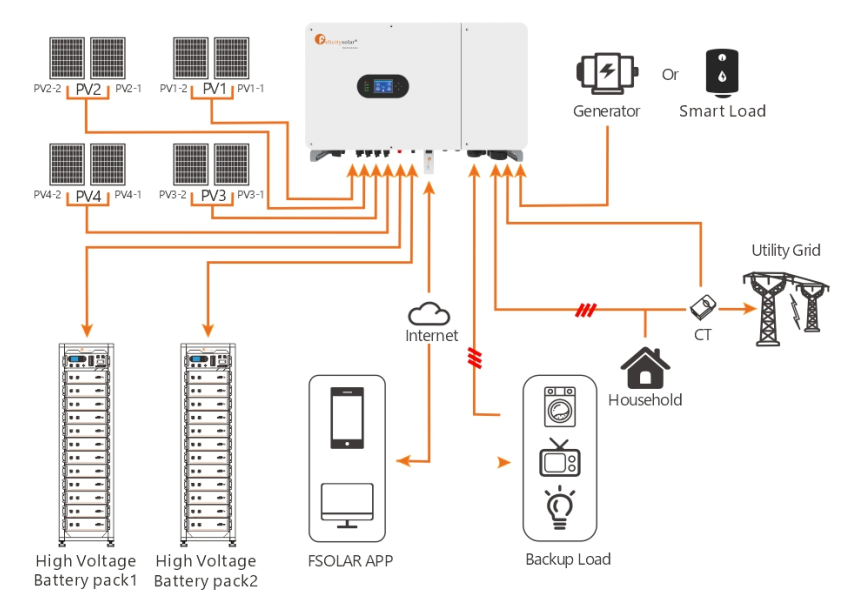
- Panels can be wired in series, parallel, or a combination.
- Voltage increases with series wiring, while parallel wiring increases current.
- Match the setup according to the specifications of your charge controller.
3. Connect the Charge Controller
- The first step is the connection of the battery to the controller.
- Next, connect the solar panels to avoid voltage spikes.
- Follow proper polarity carefully to avoid damage.
4. Installing the Battery Bank
- Store batteries in a cool, dry, well-ventilated place.
- Avoid placing them near sources of heat.
- Employ proper fuses or circuit breakers.
5. Inverter Installation
- Locate the inverter near the batteries. This will minimize cable loss.
- Use thick wires having a high current rating.
- Ground the inverter to avoid electrical hazards.
Conclusion
A successful off-grid solar installation involves understanding each component, choosing balanced equipment, and planning realistically around energy needs and sunlight conditions.
Felicity Solar is a reliable supplier of off-grid solar products. We offer a variety of types of off-grid solar products, including Low Voltage, Low-Frequency, Off-grid, and Three-phase. Please visit our website to view products that meet your needs.


