
As part of today’s energy market, the rise in energy prices and the need for sustainability make companies seek innovative ways to introduce renewable energy systems. Commercial solar modules represent a key component in the process of decreasing operational expenses through effective energy production and stability.
1. How Commercial Solar Modules Achieve Energy Savings
The way commercial solar modules save energy comes as a result of using an entire system that includes solar generation, energy storage, and power consumption optimization. Rather than depending only on the grid power supply, business owners should look for the most cost-effective way to produce, store, and use their energy.
1.1 Multi-Layer Energy Optimization Process
Modern commercial solar modules systems reduce energy waste through several coordinated strategies:
- Direct solar consumption: Solar energy is used in real time during peak sunlight hours
- Load prioritization: Critical equipment is powered first to improve efficiency
- Energy storage shifting: Excess energy is stored for nighttime or peak demand use
- Smart switching control: The system automatically selects solar, battery, or grid supply depending on conditions
1.2 Energy Consumption Comparison
| Energy Aspect | Traditional Grid System | Commercial Solar Modules System |
| Energy Source | Centralized utility grid | Distributed solar generation |
| Cost Stability | Highly fluctuating | Long-term predictable cost |
| Energy Utilization | Fixed consumption model | Dynamic optimization system |
| Carbon Emissions | High | Near zero |
| Operational Flexibility | Limited | Highly flexible and scalable |
Through this structure, commercial solar modules significantly improve both energy efficiency and cost control for commercial users.
2. Key Energy Efficiency Advantages of Commercial Solar Modules
The advantages of commercial solar modules go beyond power generation. They also enhance system intelligence, stability, and long-term financial performance.
2.1 Core Benefits for Businesses
(1) Significant Reduction in Electricity Costs
Industries such as manufacturing, retail, and hospitality often face high electricity expenses, accounting for 20%–40% of operational costs. With properly designed systems, commercial solar modules can reduce electricity bills by 30%–70%, depending on energy consumption patterns.
(2) High Energy Conversion Efficiency
Commercial solar modules boast a conversion rate of up to 20% to 23%. Intelligent controllers also ensure minimal energy losses.
(3) Enhanced Energy Independence
With solar generation and storage, companies minimize the use of unstable grid power and ensure continuous work regardless of outages or tariffs.
(4) Long-Term Financial Return
A properly installed commercial solar modules system typically has a lifespan of over 25 years, with a payback period of 3–6 years, after which it generates long-term net savings.
2.2 System Performance and Real Application Example
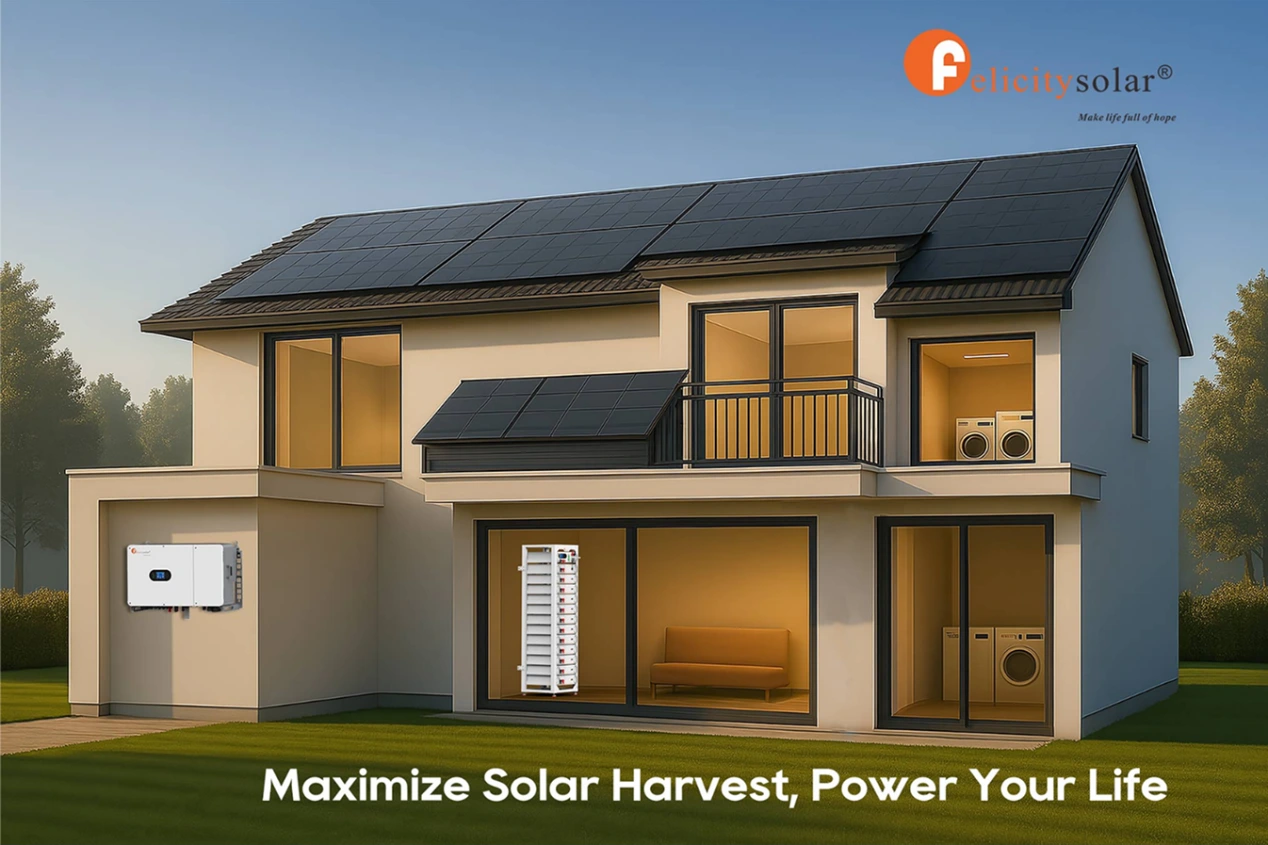
In real commercial projects, energy performance depends heavily on inverter technology and system integration. A typical example is the Felicity Solar IVGM 25~50kW-P3G2 hybrid inverter system, which is widely used in medium-scale commercial installations.
This system works in combination with commercial solar modules to ensure stable energy conversion and intelligent energy distribution.
| Feature | Technical Description |
| Power Range | 25kW–50kW, suitable for scalable commercial projects |
| Output Type | 230V / 400V three-phase pure sine wave |
| Protection Level | IP65-rated for industrial environments |
| Parallel Expansion | Supports up to 12 units in parallel operation |
| Battery System | Dual independent battery inputs for stable operation |
| Charging Current | Up to 50A per battery channel |
| Monitoring System | WiFi + cloud-based remote monitoring |
| Switching Speed | UPS-level transfer within <10ms |
The Felicity Solar IVGM 25~50kW-P3G2 enhances the performance of commercial solar modules by ensuring stable energy flow between solar panels, batteries, and the grid, which significantly improves overall system efficiency.
3. Commercial Application Scenarios
The adoption of commercial solar modules continues to expand across various industries due to their strong cost-saving performance:
- Manufacturing plants with continuous production loads
- Large retail centers and supermarkets
- Hotels, office buildings, and commercial complexes
- Cold storage and logistics warehouses
- Microgrid and hybrid energy systems
In these environments, solar systems significantly reduce electricity dependency while improving operational stability.
4. Conclusion
As global energy costs continue to rise, commercial solar modules have become an essential solution for businesses seeking long-term energy efficiency and cost control. By combining high-efficiency solar generation with intelligent energy management systems, companies can achieve both financial savings and operational stability.
For more detailed system recommendations or project support, feel free to contact Felicity Solar for professional assistance.
FAQ
Q1: Can the Felicity Solar IVGM 25~50kW-P3G2 work with commercial solar modules systems?
Yes. It is designed to integrate seamlessly with commercial solar modules for hybrid energy management.
Q2: What happens if the grid power fails?
UPS level switching is provided to ensure non-stop electricity generation.
Q3: How many units of IVGM 25~50kW-P3G2 can be connected together?
This can work with a maximum of 12 units simultaneously to meet commercial energy requirements.
Q4:Can remote monitoring be done using the system?
Yes. The system has WiFi remote monitoring features along with other advanced remote monitoring techniques.


