


It involves identifying the various elements required in the establishment of an off-grid solar array that functions autonomously without any reliance on the utility grid.
An off-grid solar array is a system set up to function without the support of any utility grid, as the electricity produced can be stored, generated, and converted autonomously. The following article describes the major components of the off-grid solar array system and the role of each of them within the system.
1. Solar Panels – The Energy Foundation
In off-grid solar array installations, solar panels perform the task of absorbing sunlight and converting it into electricity.
Important aspects of solar panels are:
- Photovoltaic cells – These cells convert sunlight directly into DC electricity
- Efficiency levels – More efficient solar panels produce more energy from less space
- Weather resistance – Solar panels can resist adverse weather like wind, rain, and snow
- Types of solar panels – Monocrystalline panels are highly efficient, whereas polycrystalline panels are economical
Without solar panels, an off-grid solar system does not work at all.
2. Solar Charge Controller – Energy Management Unit
The charge controller is responsible for the safety and efficiency of the off-grid solar array setup through controlling electrical current flowing from panels to batteries.
Functions:
- Overcharge protection: Protects the battery from overcharging issues
- Voltage regulation: Maintains consistent voltage to the battery bank
- Charge controller types:
PWM – cheap but not efficient
MPPT – more sophisticated, 20-30% more efficient than PWM
- System protection: Protects the system against reverse current during nighttime
This unit is critical for extending the system life.
3.Batteries – Storage of Energy Reserve
Batteries contain extra energy that the off-grid solar array produces during sunny conditions.
Main characteristics:
- Storage capacity of energy: It depends on kWh, which means how long the power will last
- Types of batteries:
Lithium ion: Longer life expectancy, quick recharge process, efficiency
Lead acid: Cheap but heavy and short life expectancy
- Depth of discharge (DoD): Refers to how much energy can be consumed
- Backup of energy: Helps to ensure power supply at night time or in cloudy days.
Batteries are key elements in ensuring uninterrupted power availability.
4. Inverter – Power Conversion Device
The inverter is responsible for converting DC power generated from the off-grid solar array system into AC power that can be utilized by electrical equipment within a household setting.
Responsibilities:
- Conversion of DC to AC power: This will ensure compatibility with domestic appliances
- Production of pure sine waves: To produce consistent power supply
- Selection of capacity: Depending on the total power consumption of the house
Without the inverter, the solar energy becomes useless in domestic application.
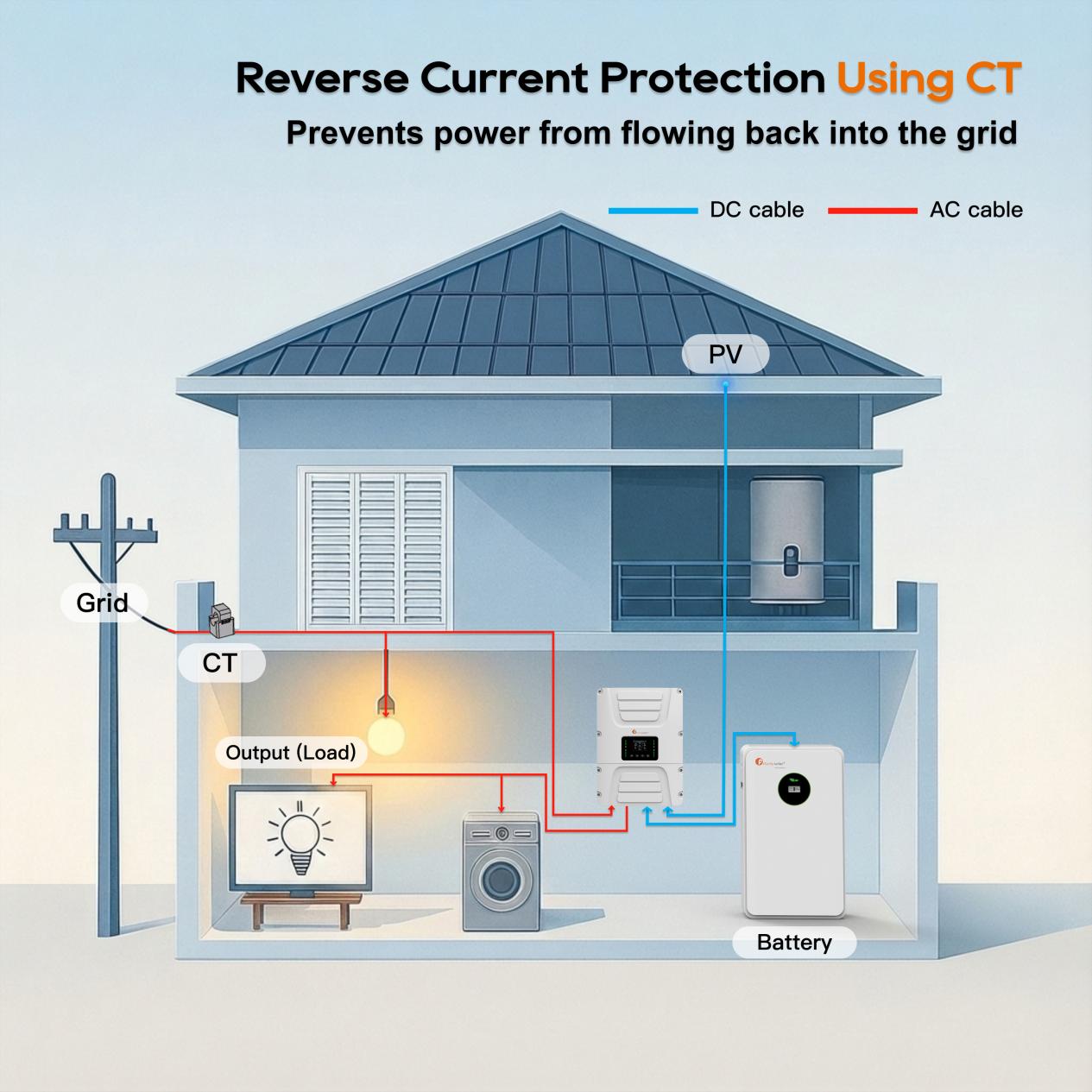
System Component Overview Table
| Component | Function | Importance | Common Type |
| Solar Panels | Generate electricity from sunlight | Essential | Monocrystalline / Polycrystalline |
| Charge Controller | Regulates power flow | High | MPPT / PWM |
| Battery Bank | Stores energy | Essential | Lithium-ion / Lead-acid |
| Inverter | Converts DC to AC power | Essential | Pure sine wave / Modified sine wave |
5. Technical Issues that Influence Solar Power Array’s Performance & Efficiency
The total performance of a off-grid solar array when not connected to the power grid relies on many technical issues.
Considerations:
- Proper tilting of the panels increases energy collection efficiency;
- Sizing of battery storage to meet energy requirements ;
- Reducing energy losses by using high-quality cables ;
- Conditions, sunlight levels affect energy generation.
The right system design guarantees reliability and sustainability of energy provision.
Conclusion
The off-grid solar array is made up of solar panels, charge controllers, batteries, and inverters that operate harmoniously in supplying electricity that can stand alone. Each of the components needs proper understanding for one to design efficient systems.
FAQ
Q1: What is the life expectancy of an off-grid solar array system?
If maintained well, panels should last for 20-25 years, whereas batteries will last for 5-15 years, depending upon their nature.
Q2: Can an off-grid solar array support the entire home’s electrical requirements?
Yes, provided that there is enough panel capacity as well as battery storage available.
Q3: What will happen on cloudy days for several days in a row?
Batteries provide energy, yet continuous low sunlight might necessitate generators as backups.
Q4: Is MPPT superior to PWM for off grid systems?
Yes, since MPPT controllers work much more efficiently than others.


