
The selection of an appropriate system for your domestic solar installation is critical to ensuring the efficiency and reliability of the entire process. The single-phase hybrid inverter is one of the core components of the system and is responsible for controlling the whole process of energy production, battery management, and power consumption in the house.
1. Definition of a Single-Phase Hybrid Inverter
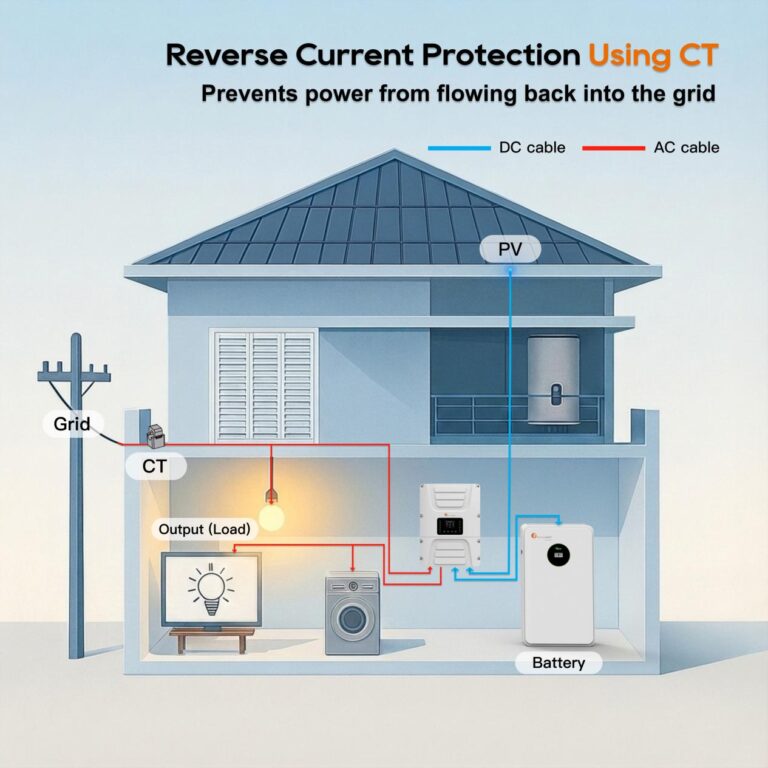
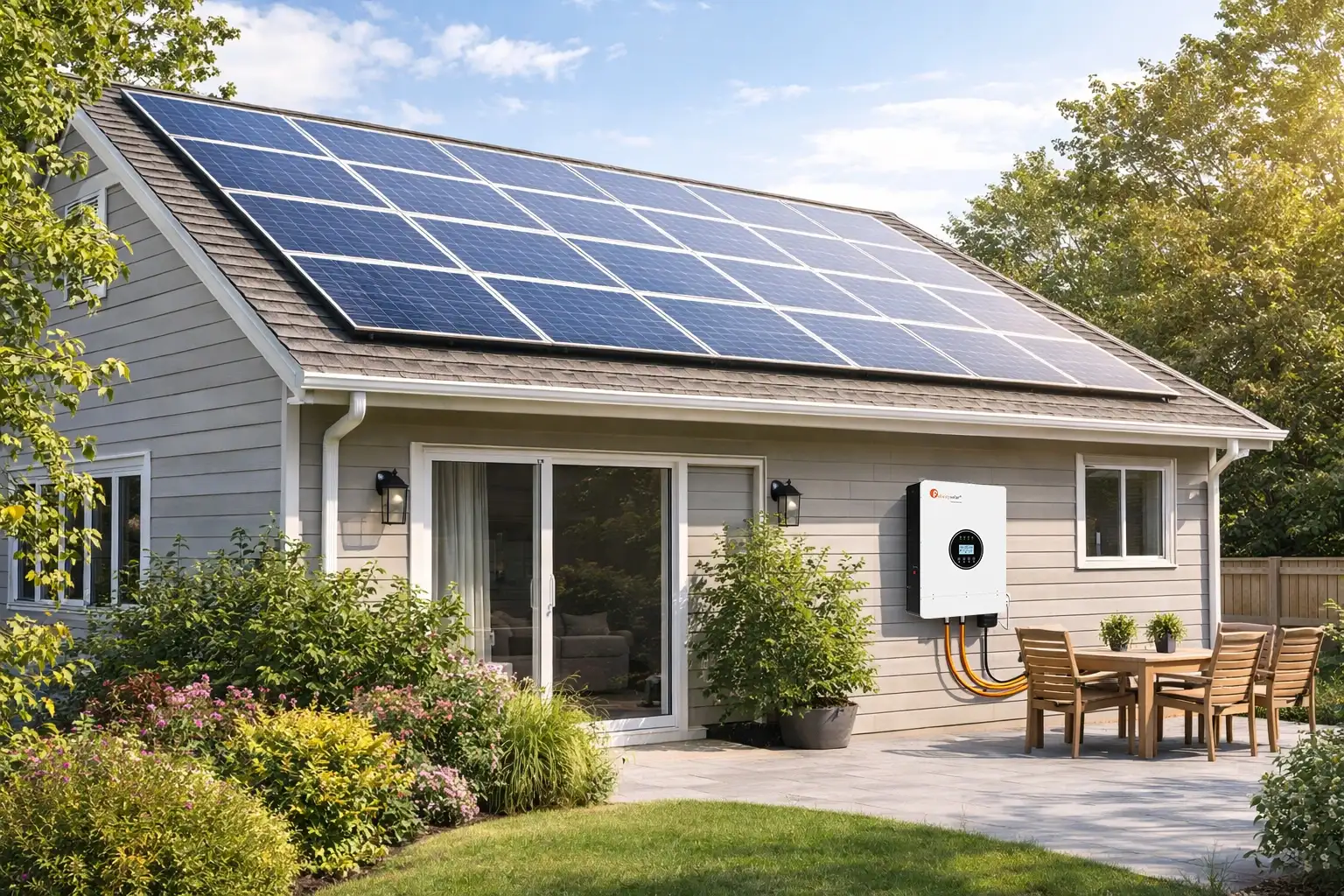
The single-phase hybrid inverter is a combined power system that has the capability of converting the solar power into useful power, charging the battery, and also interacting with the grid system. The single-phase hybrid inverter manages the energy by transferring energy from the solar panel to the battery and the household appliances.
Main functions include:
- Managing battery charging and discharging
- Switching automatically between grid and off-grid modes
- Optimizing household energy usage
Technical overview:
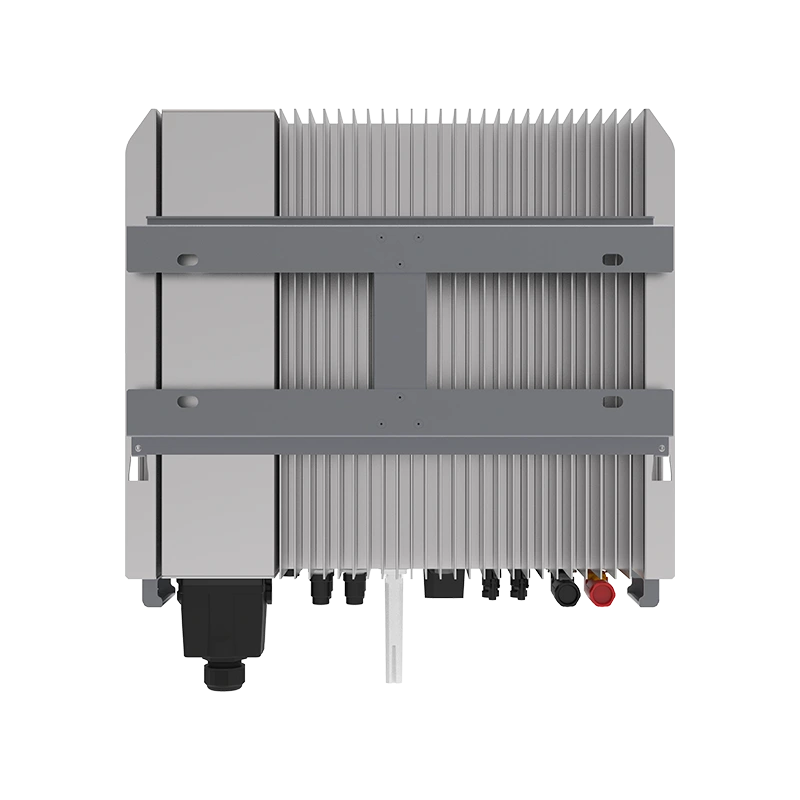
| Parameter | Typical Range |
| Battery Voltage | 40V–60V |
| Switching Time | <10ms |
| Cote de protection | IP65 |
| Type de batterie | Lithium / Lead-acid |
2. Key Factors When Choosing a Single-Phase Hybrid Inverter
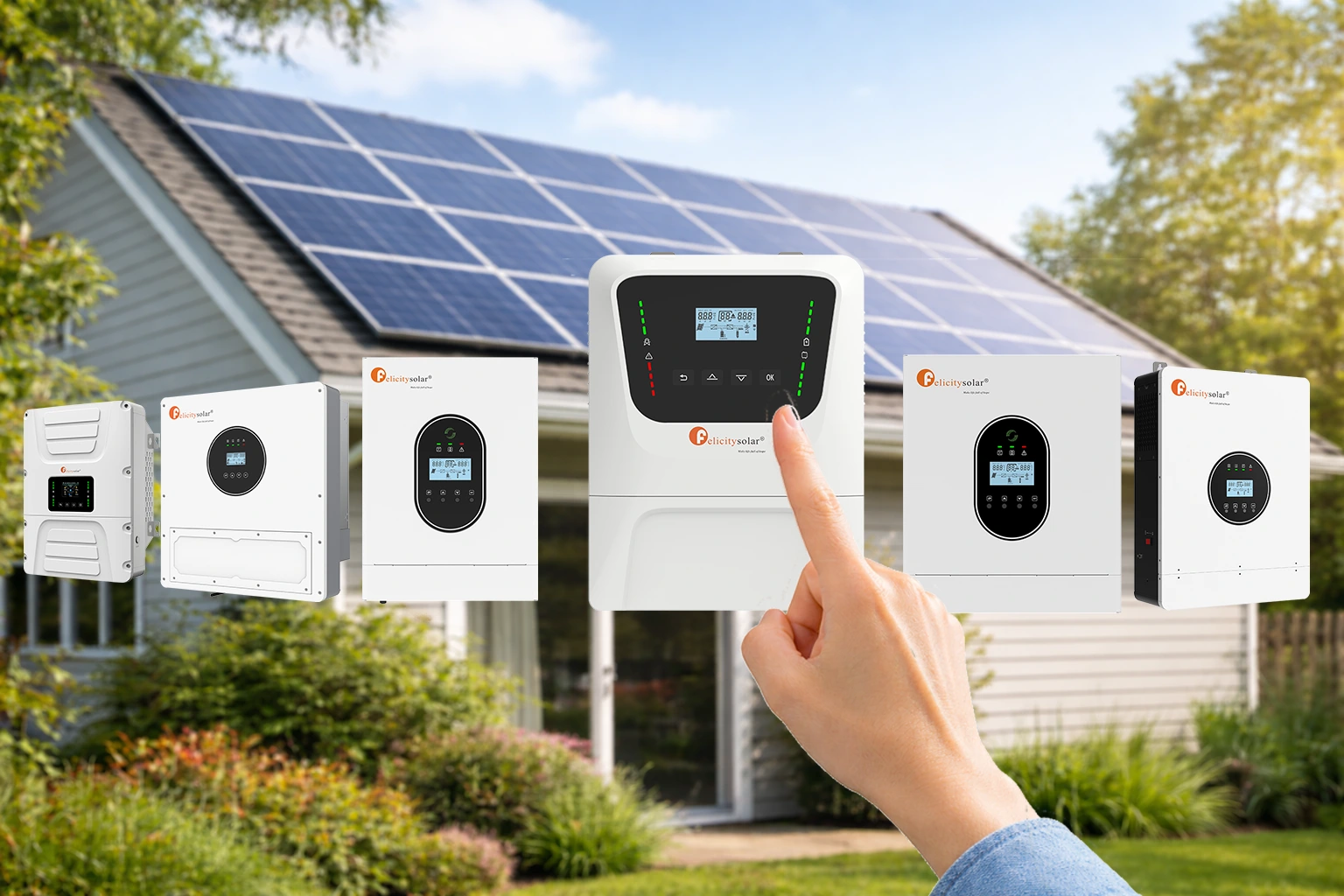
2.1 Power Matching
The correct size depends on the total household load to avoid overload or underutilization.
2.2 Battery Compatibility
A good single-phase hybrid inverter should support:
- Lithium and lead-acid batteries
- BMS communication integration
- High charge/discharge current handling
2.3 Energy Efficiency
Most modern systems operate between 96% and 98% efficiency. Higher efficiency directly improves long-term savings.
2.4 Smart Energy Control
Les principales fonctionnalités incluent :
- Mobile APP monitoring
- Gestion de l'énergie infonuagique
- Real-time system status tracking
2.5 Safety Protection
- Over-voltage protection
- Short-circuit protection
- Over-temperature protection
- Anti-islanding protection
3. How Different Homes Choose a Single-Phase Hybrid Inverter
The need for energy varies in each family; therefore, the choice must always be based on real consumption.
Small Family (Basic Consumption)
Small families tend to depend on basic appliances like lighting, refrigerators, and TV. The consumption is low; hence, system reliability and power backup capacity become the primary concern.
In this segment, a single-phase hybrid inverter like Felicity Solar IVGM5KLP1G1 is sometimes used as a reference option for entry-level residential systems. It is designed with basic hybrid functionality, supporting both solar input and battery storage integration, which makes it suitable for simple home backup scenarios.
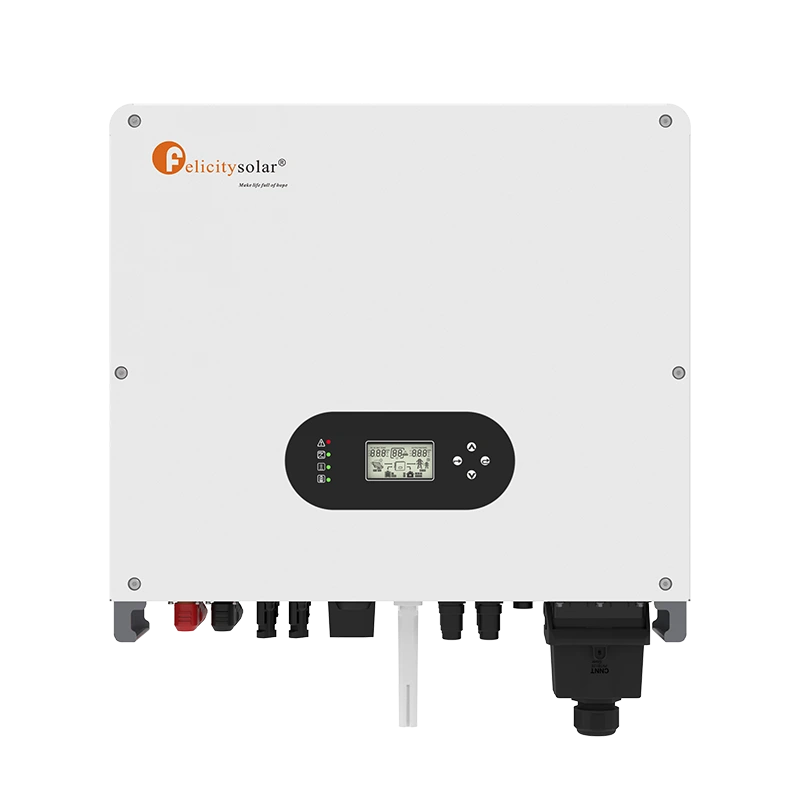
Example specification:
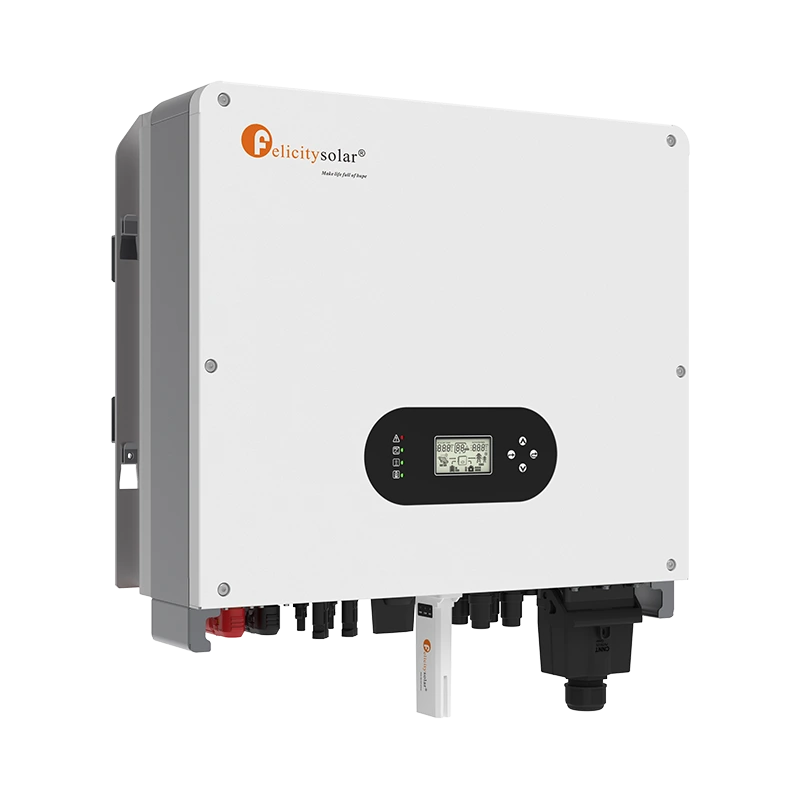
| Article | Spécification |
| Puissance nominale | 5 kW |
| Battery Voltage | 40–60V |
| MPPT Input | Multi-channel design |
| Niveau de protection | IP65 |
| Garantie | 10 ans |
This type of system is suitable for basic backup power or small off-grid residential setups.
Standard Household (Daily Usage)
Standard households typically include air conditioners, washing machines, and other daily appliances. Energy demand is moderate and more stable compared to small homes.
In such cases, an inverter that operates on a single phase and has a mid-level wattage capacity (5kW-8kW) is commonly used. Performance under maximum load and effective energy management outweigh mere functionality.
Large Household (High Load Usage)
Big houses tend to have many large electrical devices operating simultaneously, such as air conditioners, water heaters, and other kitchen appliances.
This means that the system’s performance will depend mostly on its capabilities regarding surges, stability, and scalability. It means that a more powerful and expandable single-phase hybrid inverter would be preferred.
4. Common Mistakes When Choosing a Single Phase Hybrid Inverter
- Choosing based only on price instead of system efficiency
- Ignoring battery compatibility
- Selecting the incorrect power size for the actual load
- Overlooking future expansion needs
5. Conclusion
When opting for a single-phase hybrid inverter, it is not necessarily about going for a highly powerful inverter, but rather a good fit for your energy needs. The size, battery compatibility, and flexibility of the inverter matter. Brands like Félicité Solaire offer a range of hybrid energy solutions designed for different residential needs, helping users build more stable and efficient home energy systems.
Pour des recommandations système plus détaillées ou du soutien au projet, n'hésitez pas à contacter Felicity Solar for professional assistance.
FAQ
1. Is the IVGM series single-phase hybrid inverter suitable for long-term home use?
Yes. The IVGM series single-phase hybrid inverter is designed for residential energy management and storage applications. It supports both grid-tied and off-grid operation modes, making it suitable for long-term use in home solar energy systems.
2. Can a single-phase hybrid inverter provide power during a blackout?
Yes. In case of a blackout from the utility grid, the system switches to battery mode automatically.
3. What battery types are supported by the IVGM series?
The IVGM series single-phase hybrid inverter accommodates both lithium-ion and lead-acid batteries. Also, it interfaces with the Battery Management System (BMS) for intelligent charging and discharging for better battery performance and safety.
4. Does the IVGM series support remote monitoring?
Yes. The system supports WiFi connectivity to the Felicity Solar smart monitoring platform.


