

As global solar energy adoption continues to grow, choosing the right inverter has become crucial for maximizing efficiency and energy management. In solar systems, understanding the difference between on-grid and hybrid inverter is essential for homeowners and system designers alike.
So, what exactly sets hybrid inverters apart from on-grid inverters? Felicity Solar, from a professional perspective, will help readers gain a comprehensive understanding of the differences between these two types of inverters, their functions, application scenarios, selection factors, and respective advantages.
Core Functional Differences of Inverters
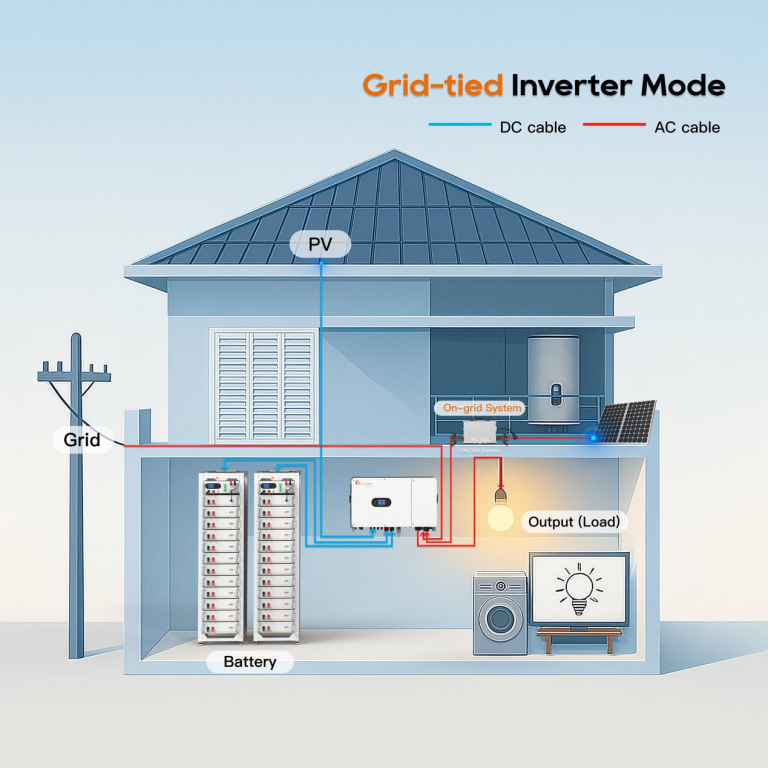
When considering solar power systems, understanding the difference between on-grid and hybrid inverter is essential. Inverters serve as the bridge between solar panels and electricity usage, converting DC (direct current) generated by solar modules into AC (alternating current) usable by household appliances.
- On-Grid Inerters
These inverters are highly efficient in transferring energy to the grid, typically achieving conversion efficiencies of over 97%. However, they do not store energy; during power outages, the system automatically shuts down to prevent back-feeding into the grid, ensuring safety for maintenance personnel.
They not only convert DC to AC for immediate consumption or grid export but also manage energy storage using batteries. This allows homeowners to store excess energy for later use, providing backup during outages.
Advanced hybrid inverters include intelligent energy management systems that optimize solar consumption, battery charging, and grid interaction, enhancing both energy independence and cost savings. Understanding the difference between on-grid and hybrid inverter highlights that hybrid inverters provide more flexibility but typically come at a higher initial cost.
Functional Differences and Application Scenarios
The difference between on-grid and hybrid inverter becomes particularly important when considering their practical applications.
(1)On-Grid Inverter Applications
- Ideal for households with stable electricity supply.
- Perfect for grid-tied solar systems aiming to maximize feed-in tariffs.
- Typically used in urban areas where grid reliability is high.
- Commonly installed in systems ranging from 3kW to 10kW for residential rooftops.
(2)Hybrid Inverter Applications:
- Suitable for homes prone to frequent power outages or blackouts.
- Frequently used in combination with 5kWh to 20kWh residential energy storage systems to cover evening and night consumption.
- By evaluating these scenarios, homeowners can make informed decisions on which inverter type best suits their energy strategy, whether prioritizing cost-efficiency or energy resilience.
Key Considerations When Choosing an Inverter
When deciding which inverter is suitable, understanding the difference between on-grid and hybrid inverter helps inform key selection criteria:
- Backup Power Requirement: Hybrid inverters provide uninterrupted power during outages; on-gridsystems do not.
- System Complexity and Maintenance:Hybrid systems may require more sophisticated monitoring and maintenance due to the additional battery components.
- Environmental Considerations:In regions with frequent voltage fluctuations or unstable grids, hybrid inverters mitigate energy loss by storing excess solar power.
These considerations illustrate why understanding the difference between on-grid and hybrid inverter is critical for designing an efficient and reliable solar system.
Comparative Analysis of Advantages
Understanding the difference between on-grid and hybrid inverter also involves analyzing their respective advantages:
(1)On-GridInverter Advantages
- Higher energy conversion efficiency, often above 97%.
- Lower initial investment and simpler system design.
- Ideal for maximizing economic benefits through grid feed-in.
(2)Hybrid Inverter Advantages
- Provides energy independence and backup power.
- Enables energy optimization and smart home integration.
- Flexible for both on-grid and off-grid expansion.
- Supports multi-day autonomy in case of prolonged outages.
For example, a household with a 7kW rooftop solar array using a hybrid inverter with a 10kWh battery can achieve up to 80% self-consumption, reducing reliance on the grid, whereas an on-grid inverter system would feed all excess power to the utility, potentially leaving the household without backup during outages.
Conclusion
- Key Benefits of On-Gridand Hybrid Inverters
Understanding the difference between on-grid and hybrid inverter is vital for designing an efficient and reliable solar energy system. Each inverter type offers unique benefits: on-grid inverters provide seamless integration with the utility grid, while hybrid inverters combine the advantages of grid connection with energy storage capabilities, offering greater flexibility and energy independence.
- Felicity Solar’s Expertise in Solar Energy Systems
For homeowners, installers, and solar energy enthusiasts looking to implement the ideal solar solution, Felicity Solar provides expert guidance, high-quality inverters, and tailored system solutions to meet diverse energy needs. For more information or to discuss a potential partnership, you can contact Felicity Solar directly to explore professional collaboration opportunities and maximize the performance of your solar energy system.


