

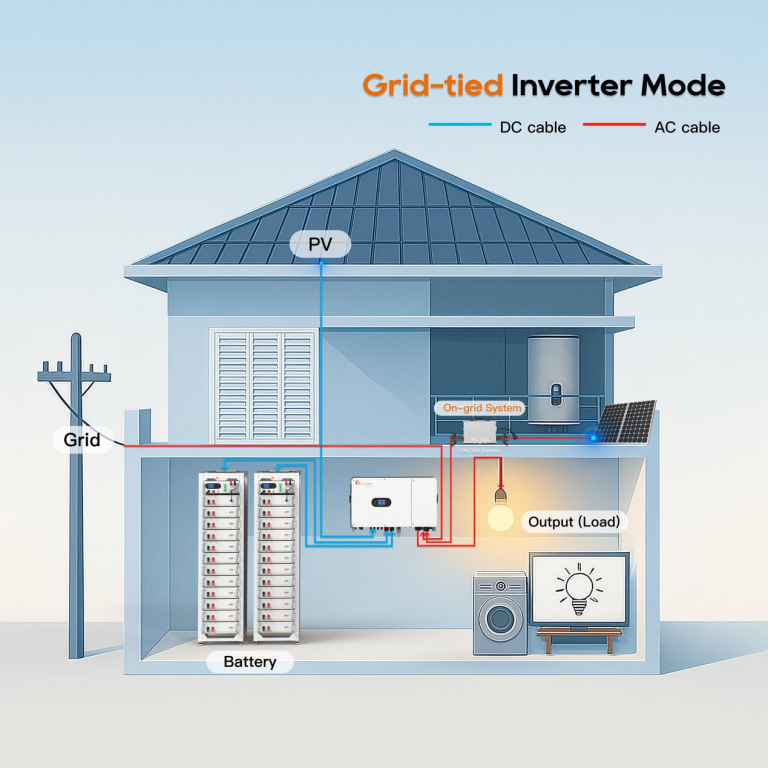
Two of the most crucial parts of solar power systems that offer stability and efficiency are the inverter and the charge controller. While they are often quoted together, they have different functions. The charge controller determines the mode through which solar power charges the batteries, while the inverter transforms stored DC electricity into AC power consumed by appliances.
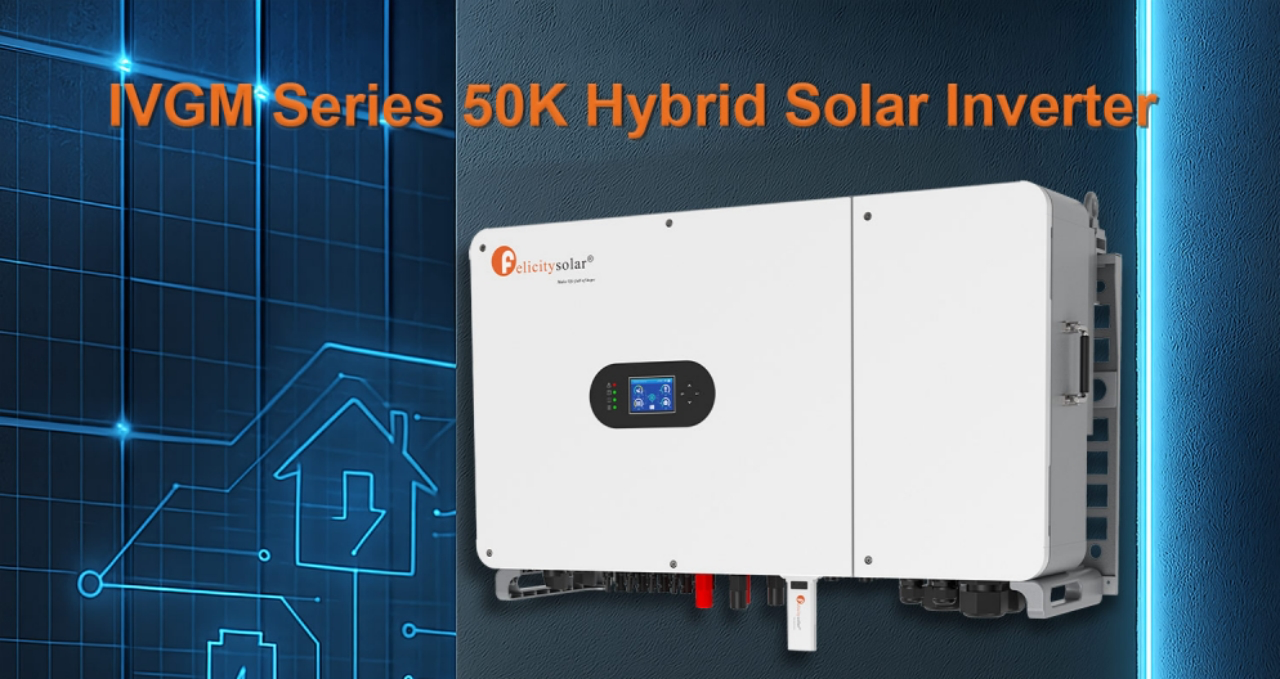
When the charge controller inverter all in one gained popularity, solution integration is today the preference of most users. Top companies such as Felicity Solar continue to offer top-notch devices with energy management simplified and streamlined.
1. The Role of Solar Charge Controllers
- Battery Regulation
There is also a charge controller between solar panels and batteries. It controls the current and voltage so that the batteries are neither overcharged nor drained too much. This prolongs the life of the batteries, in most instances by several years compared to unregulated systems.
- Efficiency in Energy Harvesting
The use of new technologies, especially MPPT solar charge controllers, can boost energy harvesting by 20–30% compared to the aging PWM technology. With the efficiency rating of up to 98%, these controllers are crucial in applications where the output must be maximized. The charging currents range as broad as 80A, thereby making them suitable for both commercial and residential use.
2. The Role of Inverters
- Conversion of Power
While the charging is controlled by the controller, the inverter facilitates electricity from batteries to be utilized. Almost every industry and device utilizes AC rather than DC, and the inverter converts it.
- Power Handling Capacity
Inverters are categorized based on output power. They can handle loads of approximately 500W for small devices, and larger units can exceed 10kW. Unlike solar charge controllers, traditional/stand-alone inverters do not manage battery charging. Instead, their primary function is to convert DC power from sources such as batteries into AC power, making it usable for standard electrical equipment.
3. Major Differences Between Charge Controllers and Inverters
Whereas the charge controller inverter all in one performs both functions, the two original devices are used for different purposes. The whys behind are most important in constructing solar projects correctly.
- Direction of Energy Flow
A charge controller controls mainly the energy flow to the battery, controlling the amount of current stored. The inverter does the reverse, sending stored energy and passing it to the appliances. This reverse operation shows their complementary but reverse functions.
- Voltage and Current Regulation
Charge controllers take care of battery voltage regulation, typically 12V, 24V, or 48V. Inverters, on the other hand, regulate output to suit home grid specifications, i.e., 110V or 220V AC. The voltage range easily separates them on the basis of operation.
- Impact on System Efficiency
The efficiency of a charge controller can enhance battery utilization by up to 30% using MPPT technology. Inverters define overall usability, i.e., over 90% stored power is utilized as usable AC electricity. Both contribute in different ways to overall system efficiency.
4. Why Choose Charge Controller Inverter All in One
- Simple Installation
With the integration of the two technologies, the all in one charge controller inverter does not use individual devices. This implies the installation is less time-consuming, wiring is simpler, and there are fewer points of failure.
- Improved System Efficiency
All-in-one units should come with built-in MPPT tracking and improved inverter capabilities. The result is seamless management of solar energy, and systems can function smoothly even with inconsistent levels of sunlight.
- Cost and Space Savings
Instead of purchasing two individual devices, customers can invest in a single integrated unit. This is cost-effective in domestic applications and minimizes investment costs in companies. As a professional solar charge controller supplier, Felicity Solar provides assured one-stop solutions to serve the demands of a small household or huge buildings.
5. Applications of Integrated Systems
An all-in-one charge controller inverter has applications in various fields.
- In domestic solar units, it can be used with 12V, 24V, or 48V batteries and offers stability to the power supply of home appliances.
- In industrial applications, high-power units offer power supply to offices, manufacturing lines, and communication equipment.
- In off-grid sites, combined units offer a compact solution with less maintenance frequency, offering a power supply in harsh weather conditions.
6. Conclusion
An inverter and a charge controller are complementary but different. The controller safeguards batteries and optimizes charging, while the inverter transfers stored energy to useful electricity. With the development of the charge controller inverter all in one, today these two processes can be integrated into one system, and that is convenient, efficient, and offers long-term stability to users.
Through partnerships with trusted sources like Felicity Solar, consumers have the security of knowing that platforms will perform consistently to provide ongoing energy savings and eco-friendly performance.


