

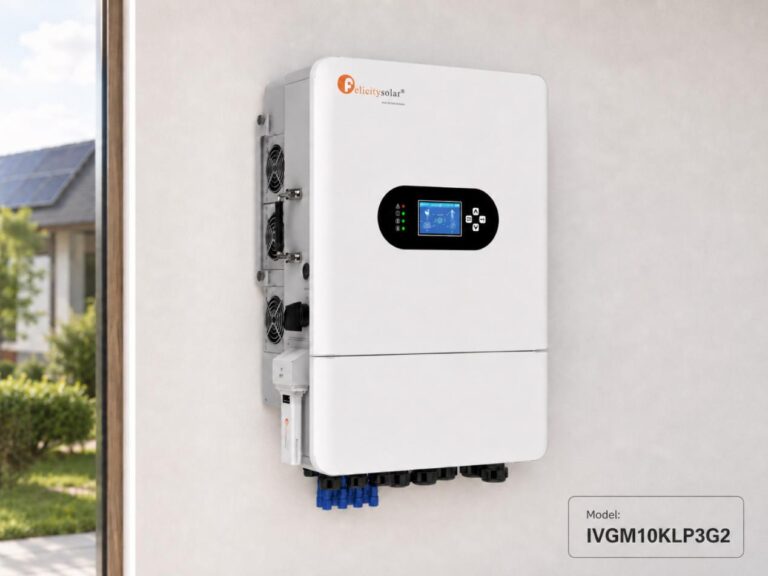
In any solar energy system, the inverter is the central component that manages energy conversion and distribution. It determines the efficiency, stability, and reliability of power delivery. Whether you are a homeowner or running a business, choosing the right Felicitysolar inverter requires careful evaluation of your power needs, system type, battery compatibility, and potential future expansion to ensure long-term performance and energy savings.
1. What is a Solar Inverter?
A Solar inverter converts the direct current (DC) generated by solar panels into alternating current (AC) for household or commercial use. It also provides energy management and system protection.
Key functions include:
- DC to AC conversion
- Solar and battery energy coordination
- Grid and off-grid automatic switching
- Safety protection,including overvoltage, overload, short circuit, and over-temperature
The typical conversion efficiency reaches 95%–98%, ensuring stable performance and maximizing solar energy utilization.
2. Key Factors When Choosing a Felicitysolar Inverter
Selecting a Felicitysolar inverter involves considering several technical aspects, not just total power capacity.
Power Requirements
Different applications require different power ranges:
- Residential: 1–20kW
- Small commercial: 10-50kW
- Industrial: 50kW+
For example, a factory with an average daily consumption of 400 kWh usually requires a system around 50 kW to reliably support peak loads.
Battery Compatibility
Felicitysolar inverters support various battery configurations:
- 48V low-voltage battery systems
- Lead-acid and lithium-ion batteries
- Optimized for peak and off-peak load management
Integrating battery storage can improve overall energy utilization by 30%–40%.
MPPT Tracking Efficiency
Maximum Power Point Tracking (MPPT) directly impacts solar output:
- Multiple MPPT channels allow for irregular roof layouts
- Optimizes output for panels with different orientations
- Peak tracking efficiency up to 98%
Expandability
- Supports parallel operation of multiple inverters
- Allows future system expansion
- Suitable for growing commercial energy needs
3. Types of Felicitysolar Inverters
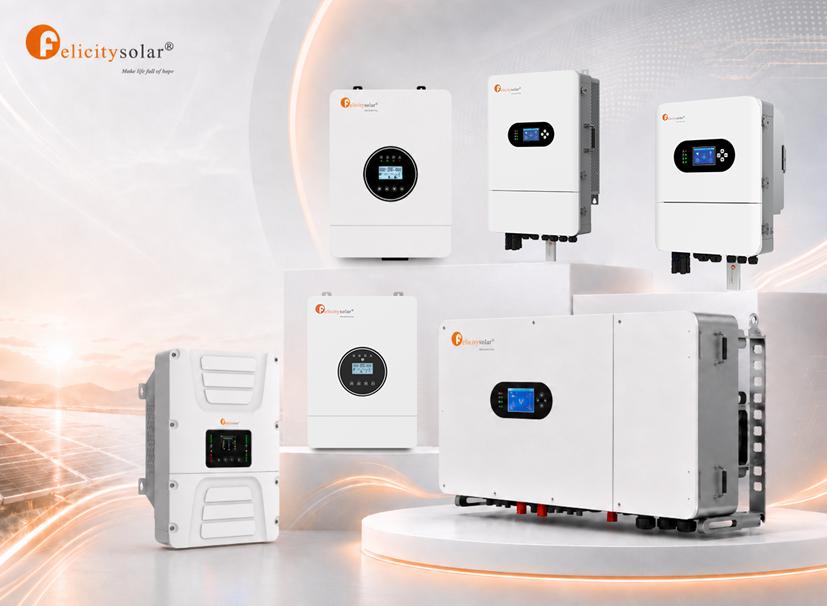
Felicitysolar inverter products are mainly divided into off-grid inverters and hybrid inverters.
Off-Grid Inverters
Off-grid inverters are designed for areas without reliable grid power and can operate independently.
Product Comparison Table:
| Series | Power Range | Output Type | Application | Key Feature |
| IVEM Series | 3-12 kW | Single | Home, small systems | Up to 98% efficiency |
| IVCM Series | 1-3 kW | Single | Farms, remote sites | 80A high charging current |
| IVPM Series | 5–16 kW | Single Phase | Industrial/large projects | Supports 6 units in parallel |
Highlights:
- High-efficiency energy conversion
- Robust safety protections
- Scalable for system expansion
Hybrid Inverters
Felicitysolar hybrid inverters include the IVGM Series and T-REX Series. They combine solar, battery, and grid energy management in one system.
Core features of Felicitysolar hybrid inverters:
- Smart Multi-Energy Management
Automatically allocates power from solar panels, batteries, and the grid for optimal efficiency. - Fast Switching and Reliable Power
Switches in under 10ms to ensure critical loads remain powered during grid interruptions. - Multiple MPPT Inputs
Supports several MPPT channels for panels with different angles, maximizing solar output. - Battery Management
Compatible with 48V battery systems and manages charge/discharge intelligently. - Parallel and Expandable Operation
Multiple units can work in parallel to meet growing energy requirements. - Intelligent Monitoring
LCD touchscreen, WiFi, and cloud monitoring enable remote energy management. - Safety and Protection
Includes overvoltage, overload, short-circuit, over-temperature, and current-limiting protections.
4. Residential vs. Commercial Applications
Feature | Residential | Commercial |
Power Range | 3-20 kW | 25–50 kW+ |
| System Complexity | Low | High |
Battery Dependency | Medium | High |
| Expandability | Optional | Required |
Reliability Requirement | Standard | High |
Commercial applications require more robust and scalable Felicitysolar inverters to handle larger loads and ensure system reliability.
5. Why Choose Felicitysolar Inverters?
Technical Advantages
- Up to 98% energy conversion efficiency
- Advanced MPPT optimization
- Supports hybrid energy management
Intelligent Control
- User-friendly LCD interface
- WiFi remote monitoring
- Cloud-based energy management
Safety and Certifications
| Certification | Description |
| CE | European safety standard |
| IEC | International Electrotechnical Commission |
| ISO9001 | Quality management system |
Brand Reliability
Felicitysolar provides professional after-sales support, including maintenance, troubleshooting, and spare parts to ensure long-term system performance.
Conclusion
Selecting the right Felicitysolar inverter depends on power requirements, system type, battery compatibility, and expandability. Off-grid inverters are ideal for standalone systems, while hybrid inverters offer intelligent energy management for more complex installations. A proper choice enhances energy efficiency, reduces operational costs, and ensures stable long-term performance.
If you have any questions when selecting a Felicitysolar inverter or designing your solar system, feel free to contact us. Felicitysolar provides expert technical support and tailored solutions to help you build an efficient, stable, and scalable solar energy system.
FAQ
Q1: How can I choose the right off-grid inverter?
Assess your load, battery type, and expansion needs. Ensure high MPPT efficiency.
Q2: What is the lifespan of a Felicitysolar inverter?
Typically 10–15 years under normal operating conditions.
Q3: Can hybrid inverters work during power outages?
Yes, hybrid inverters automatically switch to battery power when the grid is down.
Q4: Does Felicitysolar inverter support remote monitoring?
Yes, via WiFi and cloud-based monitoring platforms.


